
Committed to a greener future
We believe businesses play a vital role in protecting the environment. Through thoughtful practices and ongoing improvements, we strive to reduce our impact and support long-term environmental health. Explore how we're working toward a more sustainable world.
Our contribution

Net zero emissions
In 2021, we set ourselves an ambitious goal of being fully climate-compensated by the end of 2025. At the same time, we aimed to reduce emissions related to invoice distribution—our largest source of emissions—primarily through increased digitalization. In 2024, we achieved this goal, one year ahead of schedule.
The production and distribution of digital invoices are far more climate-friendly than paper invoices, and since 2021, our total carbon footprint from invoice distribution has been reduced by 43 percent, despite an increase in volume. This is largely due to digital solutions. At the same time, the compensation rate has increased from 0 to 100 percent during this period.

Modern waste management
Our office premises are equipped with modern systems for tracking all waste generated in the building, and our routines have been adapted to these systems to ensure more efficient and accurate waste management. These routines include detailed procedures for sorting, weighing, and recording sorted waste, employee training in sustainable waste management practices, continuous encouragement to sort personal waste, and closer collaboration with the building owner in monitoring and reporting in accordance with the established systems.

Responsible partnerships and sustainable supply chains
We have clear expectations that our suppliers and partners respect environmental, social, and ethical business standards, which are to be implemented through close collaboration and dialogue. Our suppliers are themselves responsible for communicating these guidelines to their subcontractors and working to ensure compliance, while also adhering to the requirements themselves. Suppliers must stay up to date with, and comply with, applicable laws, regulations, and other public requirements relevant to their operations. In addition, sustainability is given significant weight in procurement decisions.
Climate Accounts
Fair’s carbon accounting has been developed in collaboration with KAPO and follows the Greenhouse Gas Protocol (GHG), the most widely used and recognized standard for reporting greenhouse gas emissions.
Scope 3 accounted for 99.5 percent of our emissions in 2024 and includes the Group’s other indirect emissions (beyond energy), including air travel and procurement. The majority of our emissions are related to invoice distribution and the purchase of technical equipment.
0
tCO2e in Scope 1
4
tCO2e in Scope 2
815
tCO2e in Scope 3
Restoring ecosystems
At Fair, we have invested in high-quality carbon credits since 2021, enabling us to offset all residual emissions, including emissions from our clients’ invoice distribution where digitalization is not sufficient. The carbon credits are purchased from KAPO and are used to finance reforestation projects in Panama and Tanzania – countries that have experienced extensive deforestation over several decades.
In Panama, the reforestation project CO2OL Tropical Mix works to restore lost forest by planting 20 native tree species and protecting an additional 30 existing species. The forests in Panama are home to 15 endangered and vulnerable animal species, and by restoring their habitat, we help secure their future.
The project contributes to the restoration of sustainable timber production and cocoa plantations, protects economic diversity, and rebuilds a sustainable ecosystem. Twenty-five percent of the project area is designated as a conservation zone, and ecological corridors are established between different project areas.
In addition, the project supports sustainable sources of income and provides long-term employment for more than 150 people living in the area.
In Tanzania, a similar project is working to restore lost forest in the districts of Uchindile and Mapanda. Through sustainable harvesting practices, the project establishes a base forest cover and continuously restores the capacity for further forest regeneration.
In addition, the project employs more than 340 people, builds wells to provide villagers with better access to water, and improves infrastructure such as schools and hospitals. Forty-six percent of the project area is designated for conservation purposes, and monitoring results already show positive effects on biodiversity.
The project also aims to improve living conditions for local communities and to provide women with equal opportunities in the workforce as men.
.jpg)
%20(1).jpg)

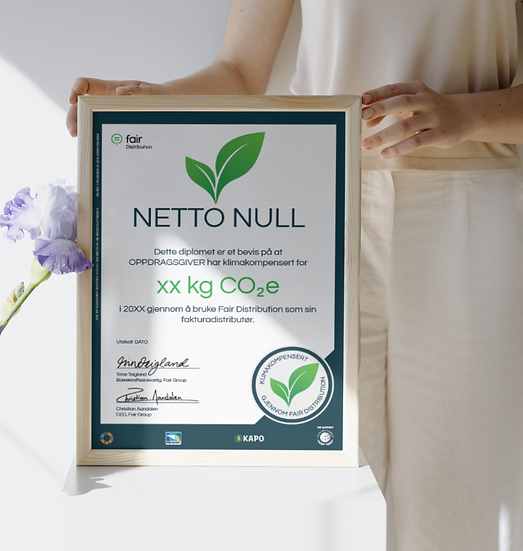

Client Certifications
We offer certifications that help our clients demonstrate responsible and forward-thinking practices through their partnership with us. Through our Responsible Creditor™ certification, we recognize businesses that ensure fair, transparent, and customer-friendly debt collection processes. Our Net Zero™ certification highlights partners who actively reduce emissions by choosing our digital, low-impact distribution and payment solutions. Together, these certifications reflect a commitment to sustainability, ethics, and better customer experiences.